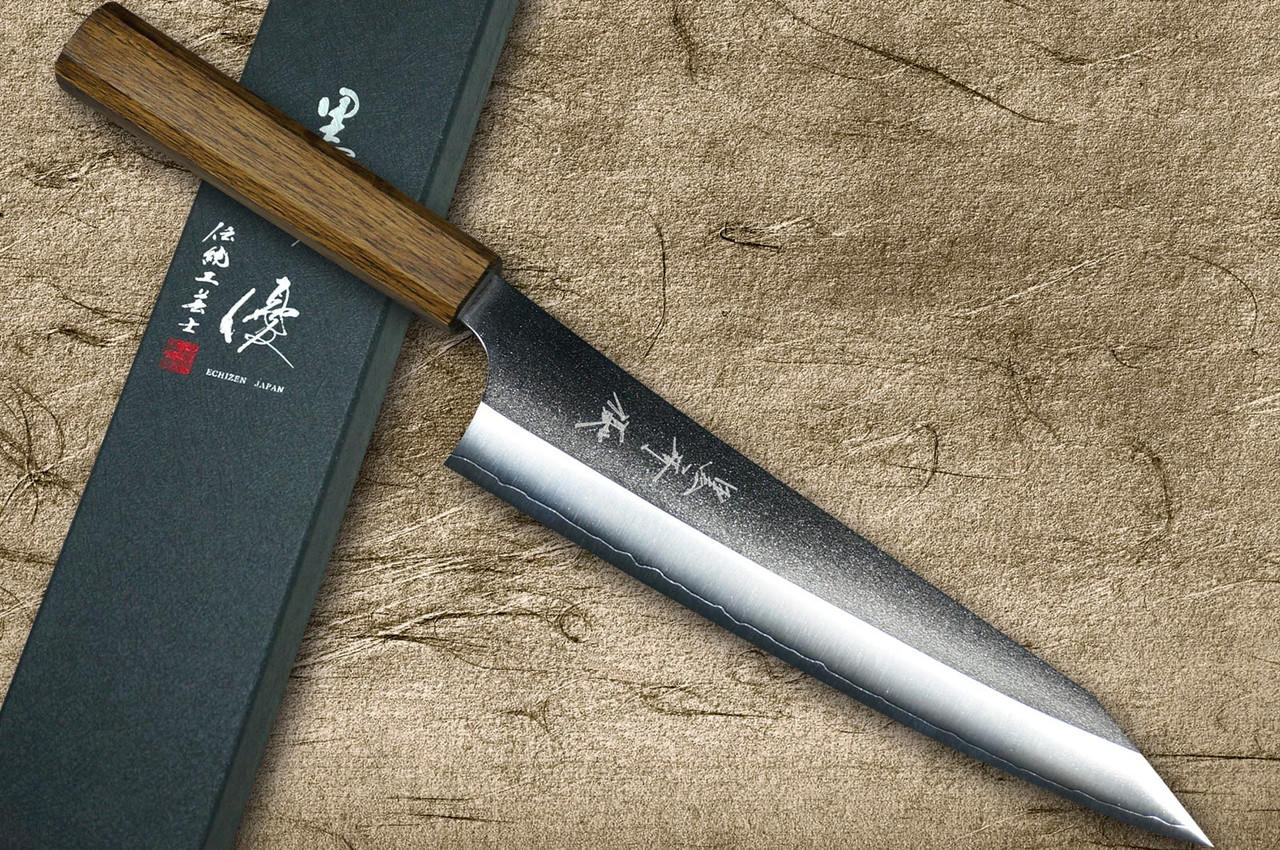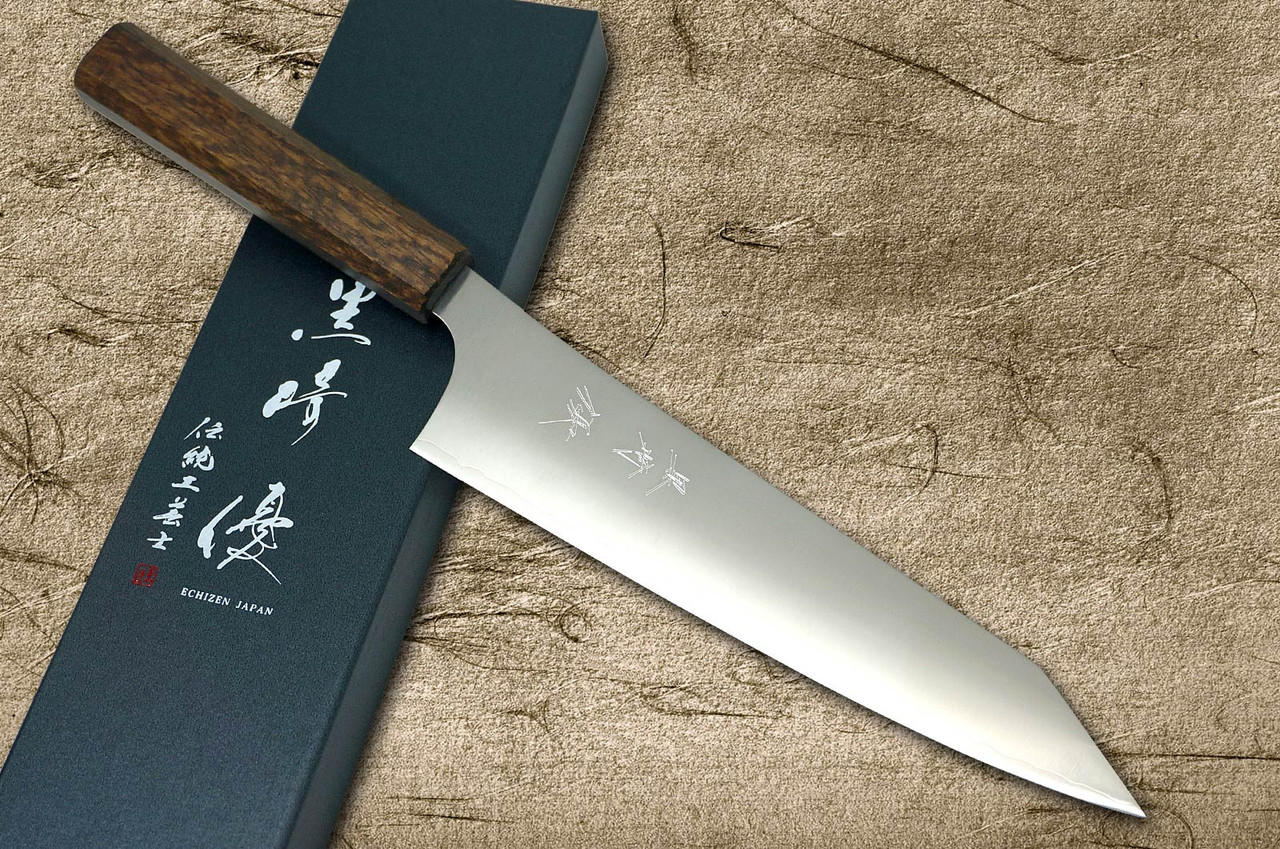
Kitchen, Serrated, and Custom Knives
Knives
have been used as utensils, weapons and tools since the Paleolithic
era of homo habilis when bits of bone and wood are speculated to have
been chipped into shape. As technology and humanity evolved copper,
bronze, iron, and eventually steel were used to make knives.
Buying a knife set is an exciting luxury for many cooks and chefs. A
good chef knife is the most versatile kitchen utensil for anyone who
is serious about preparing food. Knives are the backbone of kitchen
utensils – preparing just about any mean requires a knife and
cutting board. Professional chefs will have an entire collection of
specialized knives that perfectly suit their skill level and the demands
of a professional kitchen.
Serrated knives,
cleavers, steak knives, paring knives and bread knives are some other
examples of these sharp utensils. Each has its own task that best utilizes
the differences in blade design and surface.
The kitchen is hardly the only place to find knives in use. There are
many different styles of blades and handles for applications outside
of the kitchen. Fixed blade and folding are the two main defining knife
characteristics available on the market today. Folding knives are designed
to be compact and carried in a pocket. Fixed blades are all one piece
and usually designed for hunting or military applications.
• Survival: these blades are Bowie knives, hunting knives, tactical
or military/combat such as the recognizable Ka-Bar used by the military.
• Automatic: switchblades and/or spring assisted blades usually
feature a blade that pops out from the handle housing.
• Fantasy: swords, daggers, historical reproduction weapons all
fall into this category. These are often custom made or bought from
a specialist store.
• Throwers: specialized handle-less blades designed for accurate
throwing at a target.
Knives have also been used as part of traditions and rituals in many
different cultures throughout the history of humans.
• Sghian dubh: a small dagger usually worn with a kilt, tucked
in the top of the hose.
• Sabatier: a French blade manufactured since the early 19th Century.
• Swiss Army Knife: manufactured since 1869 this multi-purpose
pocket tool is iconic.
• Athame: a Wiccan ceremonial blade.
• Kirpan: one of the five visible symbols of the Sikh faith.
Superstition has also been a big part of the history of knives. There
are many examples throughout history regarding the symbolism and traditions
of the knife. In Greece, a black handled knife placed under the pillow
is said to prevent nightmares. A knife placed under the bed of a woman
in child labor is said to ‘cut’ the pain in half. Some societies’
burial rites leave a knife with the dead body for defense in the afterlife.
However knives are used, there are many available options on the market.
There are also custom designs that can be ordered. Be sure to check
out the rest of polkknives.com for more great information about knives.
Our Learning Center has all this great information in one place and
it’s also updated regularly so check back often!